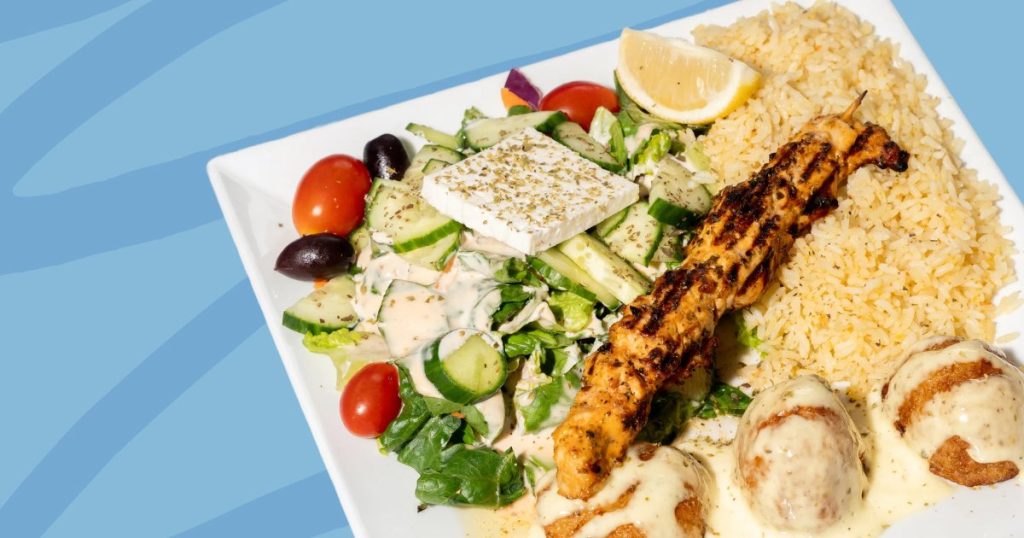
Greek food is great for weight loss. It’s built on lean grilled proteins, fiber-rich vegetables and legumes, and heart-healthy olive oil, a combination that keeps you full longer on fewer calories than heavy, cream-based cuisines. Our go-to recommendation at Souvlaki Authentique: a chicken souvlaki plate with Greek salad and a side of tzatziki, which gives you protein, fiber, and flavor without feeling like diet food.
Watching your weight doesn’t mean settling for plain chicken and steamed broccoli. Greek cuisine is rooted in balance: real ingredients, real nutrition, and real satisfaction. In this blog, we’ll break down what makes Greek meals a smart choice for staying fit without feeling restricted.
Benefits of Greek Food for Weight Loss
High Fiber and Volume: Greek salads, leafy greens, and legumes like gigantes plaki (baked giant beans) give you big, satisfying portions packed with dietary fiber. Fiber slows digestion, so you stay full longer and snack less.
Lean Proteins: Chicken or pork souvlaki, grilled fish, and strained Greek yogurt (the base of tzatziki) deliver high-quality protein that helps maintain muscle and keep your appetite in check. Not sure what to pick? Here’s how to order Greek food without gaining weight.
Healthy Fats: Extra virgin olive oil is rich in monounsaturated fats that help you feel satisfied after a meal. Just keep portions in mind, since olive oil and cheeses like feta are calorie-dense.
High-Protein Plates That Keep You Satisfied

One of the best things about Greek cuisine? It’s rich in lean, satisfying protein. Whether it’s tender chicken souvlaki, grilled fish, or a hearty lentil-based dish, protein is at the center of the plate, not an afterthought.
And that’s great news for your weight goals. High-protein meals help you stay full longer, reduce snacking, and keep your metabolism running strong. Instead of quick sugar highs and energy crashes, Greek dishes offer steady fuel your body actually needs.
Some easy go-to options:
- Chicken or pork souvlaki wraps: Portable, protein-packed, and flavorful without the grease.
- Lentil or chickpea bowls: Plant-based protein with fiber to keep you full.
- Grilled fish plates: Light, clean, and rich in omega-3s.
Greek food lets you fill your plate with purpose and enjoy every bite.
Greek Salads That Are Filling

Forget the sad side salad, Greek salads are in a league of their own. With juicy tomatoes, crisp cucumbers, briny olives, red onions, and a generous sprinkle of feta, these bowls aren’t just fresh, they’re full of flavor and texture.
What makes them weight-friendly is their balance. You’re getting fiber, hydration, and essential nutrients, all in a big, satisfying portion. Add grilled chicken, pork, or halloumi on top, and it transforms into a complete meal that keeps you full for hours.
This is what nutritionists call volume eating: large portions with low calories but high nutritional payoff. It means you can eat until you’re truly satisfied, without overloading on calories.
Plus, Greek salads are perfect for warm weather and light meals. They’re refreshing, easy to digest, and endlessly customizable.
The Olive Oil Culture

Unlike heavy cream-based sauces or processed dressings, Greek food relies on extra virgin olive oil, a heart-healthy fat that brings both richness and real health benefits.
Olive oil supports fullness, flavor, and digestion, making meals more satisfying without unnecessary heaviness. A little drizzle goes a long way: it enhances grilled veggies, adds depth to salad dressings, and works beautifully in marinades.
The key? Moderation. Greek cooking doesn’t drown dishes in oil, it uses it purposefully to elevate the meal while keeping things light and clean. It’s a smart swap that helps you enjoy bold, savory meals that align with your weight goals.
Tzatziki: The Creamy Dip That’s Light and Protein-Rich
Craving something creamy but don’t want to derail your goals? Tzatziki is your answer. Unlike heavy mayo- or cream-based sauces, tzatziki is made from Greek yogurt, cucumbers, garlic, olive oil, and herbs, a refreshing mix that’s as healthy as it is flavorful.
What makes it special?
- Greek yogurt is packed with protein, which helps keep you full longer.
- It’s naturally lower in calories and carbs compared to other creamy condiments.
- The cucumber adds hydration and crunch, while garlic and lemon give it a zesty kick.
Naturally Balanced Meals
The beauty of Greek cuisine is that it doesn’t rely on fads or food rules; it’s naturally balanced. Most meals follow a simple, smart structure: a lean protein, plenty of fresh vegetables, and a modest portion of carbs like rice or warm pita bread.
The cooking methods matter too. Grilling, roasting, and using fresh ingredients are the norm, not deep-frying or heavy sauces. That means you get clean, satisfying flavors without that weighed-down feeling after a meal.
For example, a plate of chicken souvlaki with rice and Greek salad checks all the boxes: protein for fullness, veggies for fiber and nutrients, and just enough carbs to keep your energy steady. It’s comfort food with a purpose, delicious, filling, and totally in line with your health goals.
Conclusion
Managing your weight doesn’t have to mean skipping meals or counting every bite. With Greek food, you can enjoy bold flavors, hearty portions, and real nourishment, all without the guilt. Thanks to protein-rich plates, satisfying salads, healthy fats like olive oil, and balanced ingredients, Greek cuisine naturally supports your health goals while keeping things delicious.
Ready to taste the difference?
Visit Souvlaki Authentique and explore a menu full of wholesome, Mediterranean meals that are perfect for mindful eating. Whether you’re dining in, picking up, or ordering online, it’s never been easier, or tastier, to eat well and feel great.
FAQs
Q1. What is the healthiest Greek food?
Some of the healthiest Greek foods are Greek salad (horiatiki), grilled chicken or fish souvlaki, gigantes plaki (baked giant beans), lentil soup, tzatziki, and plain Greek yogurt. They’re high in protein, fiber, or healthy fats and are usually grilled, baked, or served fresh rather than fried.
Q2. How many calories are in Greek food?
Calories in Greek food vary widely by dish and portion. As a rough guide, a chicken souvlaki skewer is often around 150–250 calories, a Greek salad with feta around 250–400, and a gyro wrap with fries can reach 600 calories or more. Grilled proteins with salad are the lighter choices, while pastries, fries, and extra cheese add up quickly.
Q3. Can I lose weight if I eat Greek yogurt?
Greek yogurt can support weight loss as part of a balanced diet. It’s high in protein, which helps you feel full and reduces snacking. Choose plain, unsweetened Greek yogurt, since flavored versions often contain added sugar.
Q4. What Greek foods should I limit when trying to lose weight?
When eating Greek food on a diet, go easy on fries, phyllo pastries like spanakopita and tiropita, extra feta, generous pours of olive oil, and honey-soaked desserts like baklava. They’re delicious but calorie-dense, so enjoy them as occasional extras rather than the base of your meal.
Q5. Is souvlaki good for weight loss?
Souvlaki can be a great weight-loss choice, especially chicken souvlaki. It’s lean, grilled protein that keeps you full. For the lightest option, order it as a plate with Greek salad instead of fries, or ask for extra vegetables in your pita.